Gua sha might be the most misunderstood tool in modern skincare. Half the internet says the little stone sculpts your face permanently; the other half says it does nothing at all. As usual, the truth lives in the middle — and it’s genuinely interesting.
Here’s what a professional gua sha face massage actually does, what it costs in Muscat, and how to think about the difference between the stone on your bathroom shelf and a proper session.
What gua sha actually is
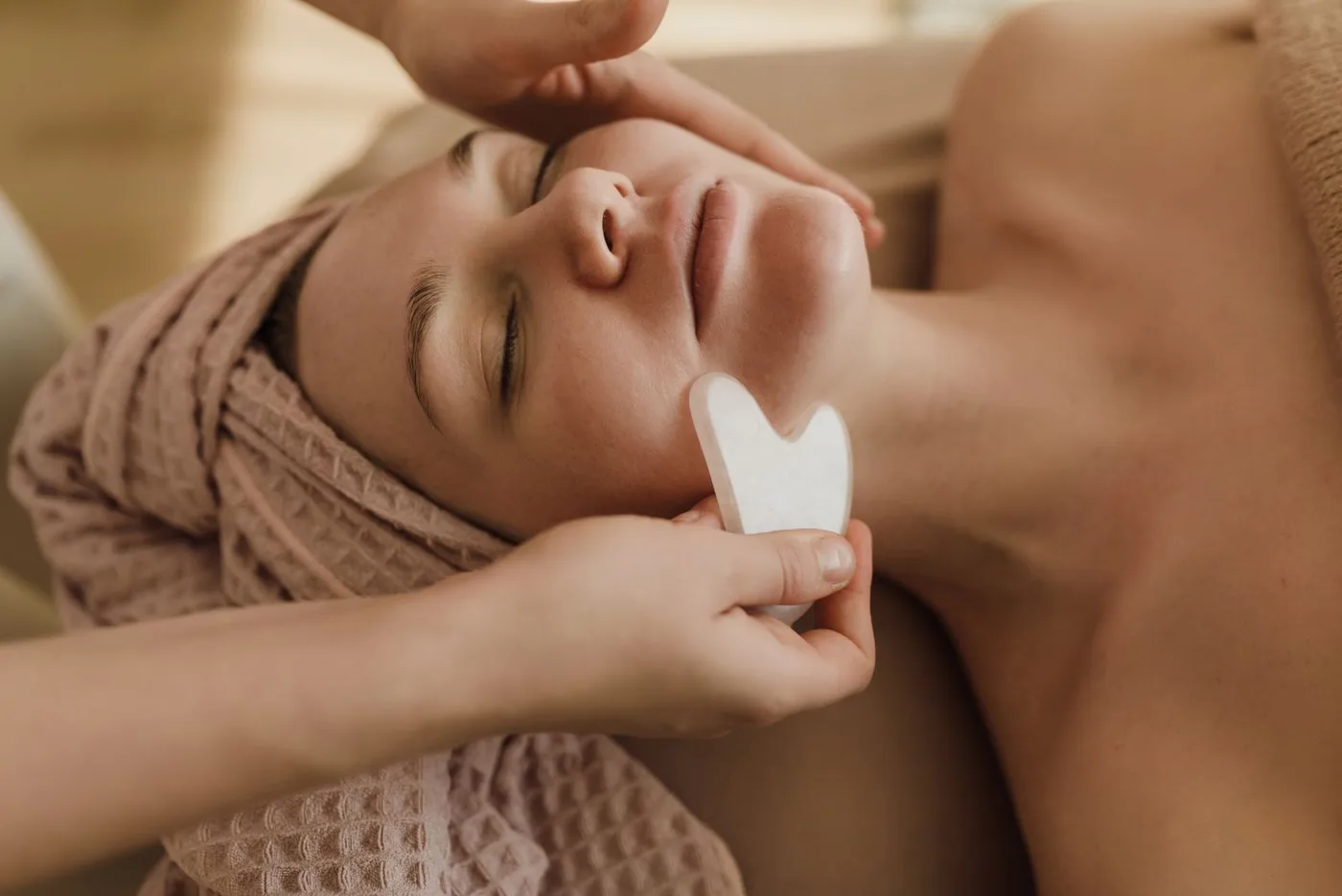
Gua sha is a traditional East Asian technique in which a smooth, flat stone — often jade or rose quartz, shaped to hug the face’s contours — is drawn across the skin in slow, directional strokes. On the body, the traditional form is vigorous. On the face, it’s the opposite: light pressure, slow rhythm, always in the direction of lymphatic drainage — from the centre of the face outward, and down the neck.
Those strokes do three things at once:
- Encourage fluid movement — easing the puffiness that collects in the face overnight or after salty food
- Release muscle tension — especially in the jaw, brow and temples, where most of us unknowingly clench
- Support circulation — that warm, rosy, “just exercised” freshness in the skin
What it honestly does — and doesn’t
Let’s separate the real benefits from the folklore.
Real: a visibly less puffy, more defined face directly after the session; a jaw that feels looser (gua sha is quietly wonderful for people who clench or grind); skin that looks fresher thanks to stimulated circulation; and deep, genuine relaxation — a face massage switches the nervous system off remarkably fast.
Temporary: the “lifted” look. Fluid returns, tension rebuilds — which is why gua sha works best as a rhythm rather than a one-off. With regular sessions the baseline improves: less morning puffiness, a more rested default expression.
Not real: permanent restructuring. A stone cannot move bone or reposition tissue for good, and no honest studio will tell you otherwise. If you want longer-lasting firming support, that’s a different conversation — one about technology like MFU, which we’re happy to have honestly.
Think of gua sha as exercise for the face’s drainage and tension patterns. One session feels great; a routine changes your baseline.
The session at B28 — and the price that surprises people
At our facial studio in Azaiba, the Gua Sha Face Lift Massage runs a full 60 minutes and costs 15 OMR — deliberately one of the most accessible treatments on our menu, because it’s also one of the best introductions to how we work.
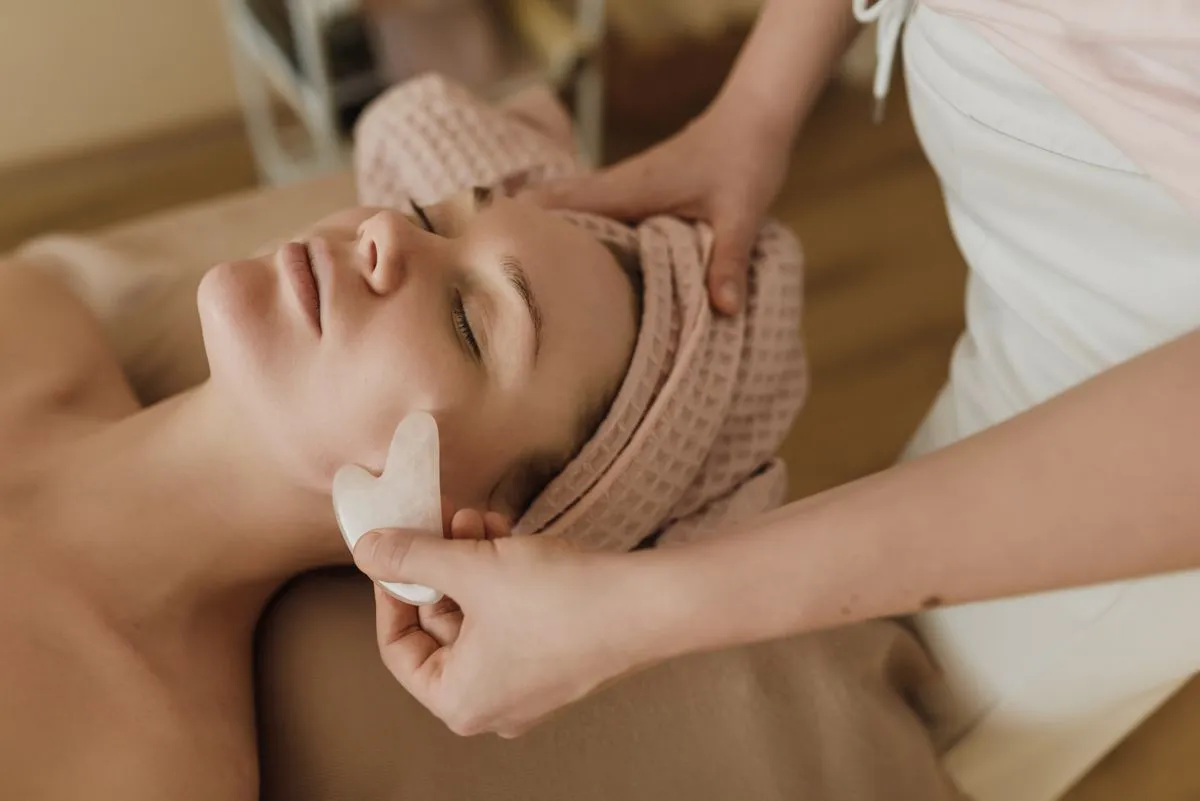
The session begins with cleansing and a facial oil so the stone glides without dragging. Then the strokes build slowly: neck first (drainage needs an open path), then jaw, cheeks, brow and temples. Warmed skin, correct direction, unhurried repetition — the three things home routines usually miss.
If you love it, a course of five sessions is 60 OMR, and gua sha technique also runs through our longer signature face-lifting massages, including the 90-minute Sculpting Face Lift Massage.
Home gua sha vs. a professional session
We’re often asked whether the stone at home is “enough”. Honest answer: they’re different things.
Home gua sha — two minutes with your serum in the morning — is a lovely habit that maintains freshness. But most people press too hard (drainage vessels sit just under the skin; force bypasses them), move too fast, and skip the neck entirely, which is like mopping a floor towards a closed door.
A professional hour works the entire drainage pathway in the right order at the right pressure — and you don’t have to do anything except breathe. Do both: the session as the reset, the home stone as the maintenance.
A note for Muscat life
Air conditioning, long screen hours and jaw tension from busy days are a recipe for exactly what gua sha addresses: a face that holds fluid and grip. If you wake up puffy, hold stress in your jaw, or simply want an affordable way to try face work before committing to bigger treatments — this is the door in.
Book on Fresha or message us on WhatsApp, and if you’re not sure whether gua sha or a glass-skin facial fits your goal better, ask — we’ll tell you honestly.