Lymphatic drainage might be the most talked-about massage on social media right now — credited with everything from “detoxing” the body to reshaping it overnight. As usual, the truth is quieter than the hype, and more interesting.
Here’s what this massage genuinely does, what it doesn’t, and how to decide whether it’s for you.
The lymphatic system, in plain words
Your body has a second circulation most people never think about. The lymphatic system is a network of vessels and nodes that collects excess fluid from your tissues, filters it, and returns it to the bloodstream. It’s part of how the body manages fluid balance and supports its immune housekeeping.
Unlike blood, lymph has no heart pumping it. It moves when you move — with muscle activity, breathing and gravity. Long days at a desk, long flights, heat, and hours in air conditioning all slow that movement down. The result is a feeling most of us know without naming it: heaviness, puffiness around the ankles or face, that “swollen” end-of-day sensation.
What the massage actually is
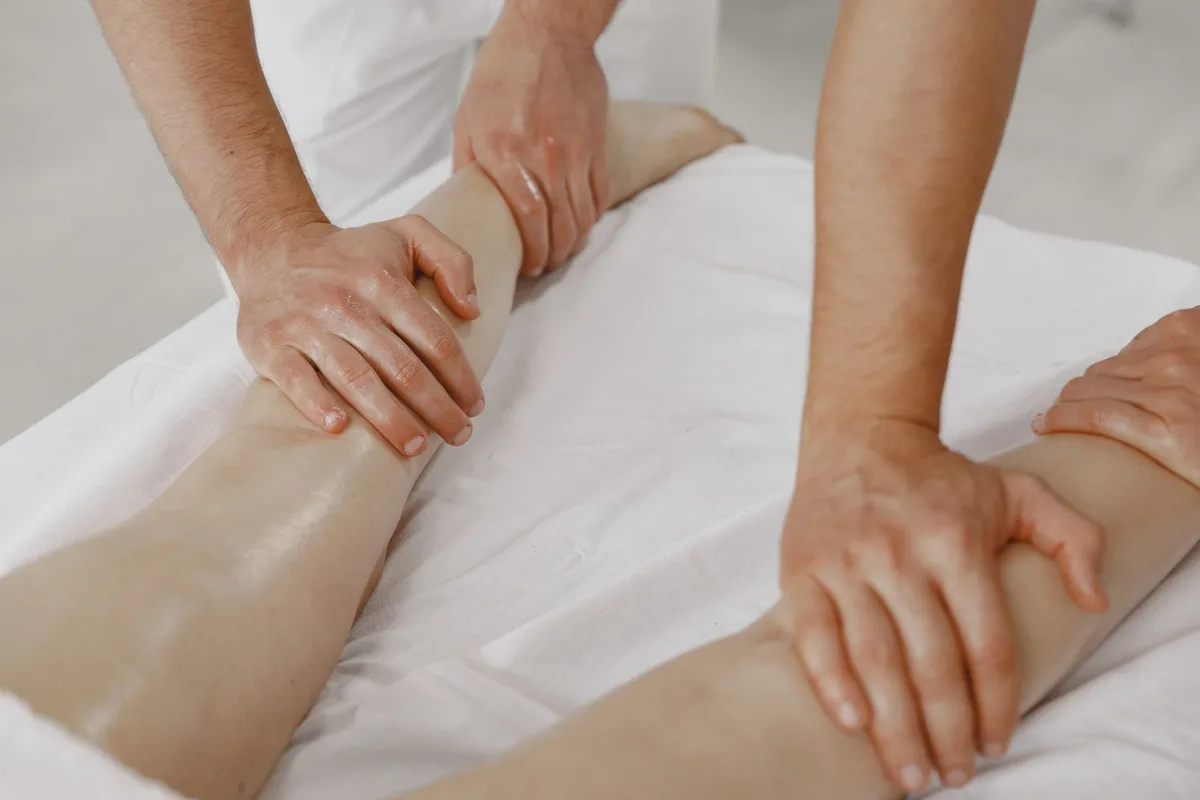
Lymphatic drainage massage uses very light, slow, rhythmic strokes that follow the natural direction of lymph flow — always towards the lymph nodes. It looks and feels completely different from a deep tissue massage: no kneading, no pressure into the muscle, no “good pain”.
With lymphatic drainage, lighter is better. The lymph vessels sit just under the skin — pressing harder doesn’t drain more, it just bypasses them.
That’s worth knowing, because it corrects the most common misconception we hear: that a massage has to be strong to work. For this particular goal, the opposite is true.
What it can honestly help with
- The feeling of puffiness and heaviness — in the legs after long sitting or flights, in the face after salty food or poor sleep
- Post-travel recovery — few things reset a long-haul body like an hour of slow, directional strokes
- A lighter, less “congested” feeling in the days after a session
- Deep relaxation — because the touch is so light and rhythmic, the nervous system tends to switch off beautifully
- The appearance of cellulite over a course — combined with treatments like Endospheres, where the mechanical stimulation and drainage work together
What it does not do
We’ll be direct, because this is where the internet oversells:
- It does not “flush toxins” in any medical sense — your liver and kidneys do that, around the clock, free of charge
- It does not cause weight loss; the centimetre changes people notice are fluid, and they’re temporary
- It is not a treatment for lymphedema or any diagnosed circulatory condition — that belongs with a doctor and a certified medical therapist, and if that’s your situation, we’ll gently point you there
Lymphatic massage at a spa is wellness care: it’s designed to support how your body feels and looks for days, not to treat disease.
The session at B28, and what it costs
At our body and massage studio in Azaiba, lymphatic work comes in two forms:
- Manual Body Lymphatic Massage — 60 minutes, 20 OMR. Full-body, slow and directional, ideal after travel or long weeks
- Manual Face Lymphatic Drainage — 75 minutes, 25 OMR. Focused on facial puffiness and definition; a course of five is 135 OMR
- For body-contouring goals, lymphatic technique also runs through our Endospheres and anti-cellulite programmes
Every visit starts with a short conversation about how your body feels and what you’re hoping for — and if a different massage would honestly serve you better, we’ll say so before you spend anything.
Why it fits life in Muscat
Muscat life is a lymphatic slow-down recipe: heat that pushes fluid retention, air conditioning for hours, desk work, traffic, and frequent flying. If your ankles feel tight by evening or your face looks puffy in the morning, your lymph is likely just moving slowly — and an hour of proper drainage, plus a little more walking and water, is a very reasonable answer. If the swelling is persistent, one-sided or painful, that is a question for a doctor rather than a spa — please treat it as one.
How often, realistically
- As a reset: one session whenever you feel heavy — after a trip, a long week, or before an event (the face version is lovely one or two days before)
- As a course: weekly for four to five weeks, then monthly maintenance, if puffiness is a constant companion
If you’re unsure, start with a single body session and see how you feel over the following three days. Your body will give you a clearer answer than any article can — including this one.